
What Should I Know About Arizona Neighborhoods Before Buying a Home
By Robbie Holycross | RJH Homes
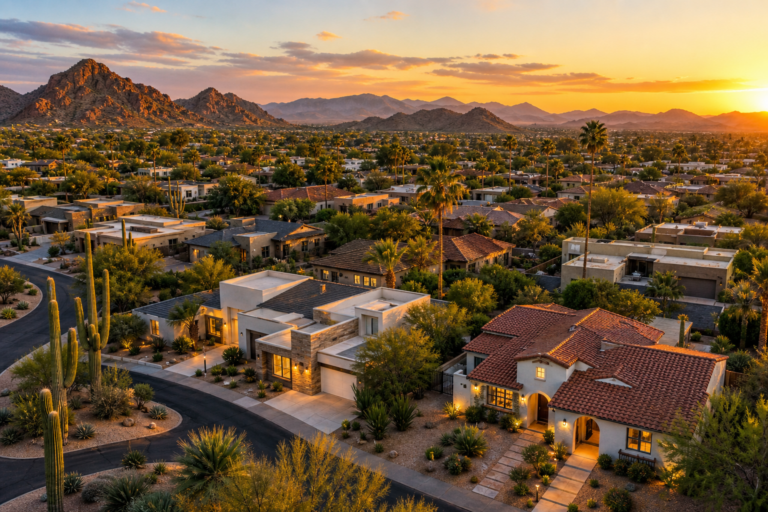
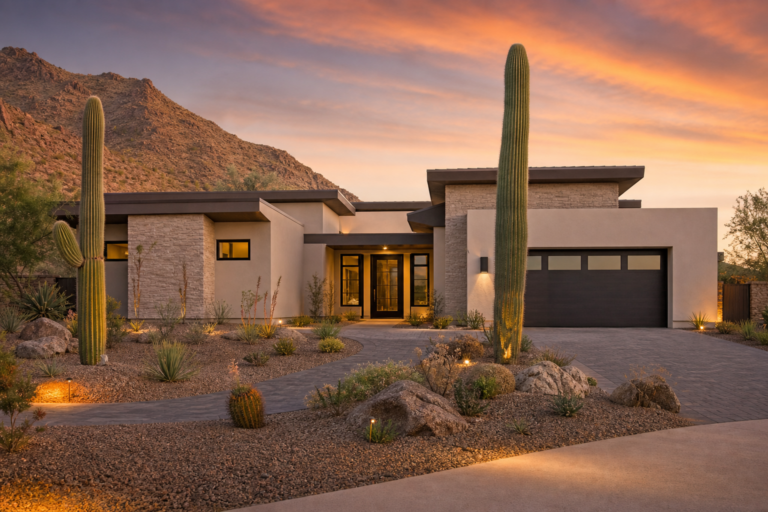
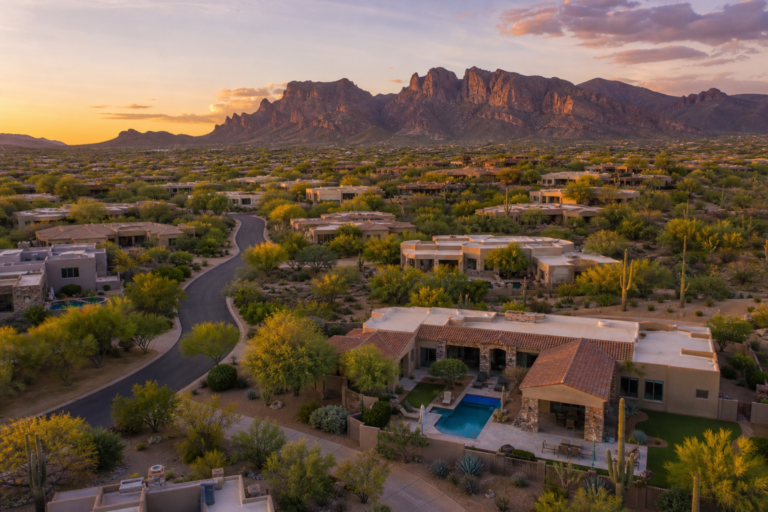
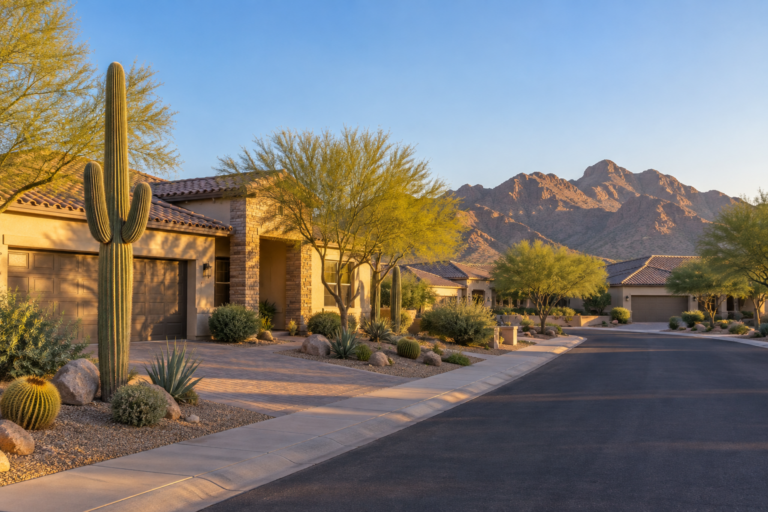
What you should know about Arizona neighborhoods before buying a home comes down to one foundational truth. The neighborhood matters more than the house. You can renovate a kitchen, replace flooring, repaint every wall, and update a bathroom. What you cannot do is pick up the house and move it somewhere else.
The neighborhood you choose determines your commute, your kids’ schools, your lifestyle, your utility bills, your HOA situation, and ultimately your resale value. Get it right and everything else is workable. Get it wrong and you will feel it every single day.
Here is what nobody tells buyers about Arizona neighborhoods before they start looking.
Arizona Is Not One Market
This is the first thing out-of-state buyers consistently underestimate. The Phoenix metro stretches roughly 50 miles east to west and nearly as far north to south. Gilbert and Surprise are both suburbs of Phoenix. They are also completely different places with different vibes, different price points, different commute realities, and different lifestyle offerings.
What works for a family with three kids in Gilbert does not work for a young professional who wants to walk to restaurants in Tempe. What works for a retiree in North Scottsdale does not work for an investor eyeing Queen Creek’s growth trajectory. Arizona rewards buyers who get specific about what they actually want before they start looking and punishes buyers who treat the whole Valley as interchangeable.
Spend time in the areas you are considering before you make any decisions. Drive them at different times of day. Walk around on a weekend morning. Eat at the local restaurants. That is the only way to know whether a neighborhood actually fits your life.
Lifestyle by Neighborhood: The Honest Version
Every buyer has a lifestyle priority whether they articulate it or not. Here is the honest breakdown of how the major Valley markets actually live.
Gilbert is built for families. Master-planned communities, top-rated schools, parks, lakes, greenbelts, and a community-focused culture that you either love or find too suburban. If you want a neighborhood where people know each other’s names and go all out for Halloween and Christmas, Gilbert delivers that. The trade-off is a longer commute to most employment hubs and a lifestyle that skews more residential than urban. Agritopia is the crown jewel of Gilbert neighborhoods, a working organic farm community with walkable restaurants and a culture unlike anything else in the Valley. Power Ranch and Morrison Ranch are both excellent master-planned options for families who want lakes, trails, and strong community infrastructure.
Scottsdale offers the widest range of lifestyle options in the entire Valley. Old Town gives you walkability, nightlife, restaurants, and energy. McCormick Ranch gives you established community with lakes and 25 miles of paths in central Scottsdale with the 101 freeway right there. DC Ranch and Silverleaf give you luxury, privacy, and prestige at the top end of the market. The price premium over the East Valley is real but so is the lifestyle and the location.
Chandler is the balance market. Strong employment base with Intel, NXP, Wells Fargo, and Bank of America all operating major campuses in the city. Good schools. More urban amenities than Gilbert. Shorter commutes to most employment corridors. The Price Road corridor running through Chandler is one of the strongest employment spines in the entire Southwest and neighborhoods with proximity to it consistently outperform on both days on market and price per square foot.
Mesa is the most undervalued market in the East Valley right now. The downtown transformation is real, the data center and semiconductor investment is significant, and the price per square foot relative to Chandler and Gilbert represents genuine value for buyers paying attention. Las Sendas offers mountain views and resort-style living. Eastmark is one of the best-selling master-planned communities in all of Arizona. Downtown Mesa is in the middle of a real transformation with new restaurants, light rail access to Tempe and ASU, and over 1,500 new homes added to the core in recent years.
Tempe is for buyers who want urban energy, walkability, and ASU proximity. It is younger, denser, and more diverse than the rest of the East Valley. It is also the most convenient location in the Valley for buyers who need to move through multiple parts of the metro regularly.
Queen Creek is for buyers who want space, newer construction, and do not mind being further out. The growth here has been significant and the areas around San Tan Mountain Regional Park offer an outdoor lifestyle that is genuinely compelling. The trade-off is distance from everything, which will matter less in ten years than it does today as the Valley continues to grow southeast.
The Commute Reality
Phoenix sprawl is real and out-of-state buyers consistently underestimate it. Twenty minutes in light Sunday traffic can easily become 45 minutes during weekday rush hour on the 101 or the 202. That is not a minor inconvenience. It is hours of your life every single week compounding over years.
If you are relocating for a job in a specific part of the Valley, drive that commute at the time of day you will actually be making it before you commit to a neighborhood. The freeways that matter most in the Phoenix metro are the Loop 101 running along the western edge of Scottsdale and the eastern side of the Valley, the Loop 202 cutting through the East Valley, the I-10 connecting downtown to the West Valley, and the US-60 running through Mesa and Gilbert. Proximity to these corridors has a significant impact on commute times and in many cases on home values.
Schools: Even If You Don’t Have Kids
School district quality affects resale value whether you have children or not. Homes in highly rated school districts consistently sell faster and for more money than comparable homes in lower-rated districts.
The top-rated districts in the East Valley include Gilbert Public Schools, Chandler Unified, and Higley Unified. Scottsdale Unified is strong on the west side of the Valley. Queen Creek Unified has been growing and improving as the community expands. Beyond public schools, Arizona has a robust charter school ecosystem including Great Hearts Academies, Basis Schools, and American Leadership Academy all drawing students from across district boundaries.
One critical thing to verify: school boundaries are address specific. Do not assume a home is in a particular school zone because it is in a certain city. Arizona has open enrollment which means you can apply to schools outside your assigned zone but acceptance is not guaranteed especially at high demand campuses. Always verify your specific address through the district boundary finder before making a purchasing decision based on schools.
New Construction vs Established Neighborhoods in Arizona
This decision comes up for almost every buyer in Arizona because new construction is genuinely abundant here in a way it is not in most major metros.
New construction gives you modern energy efficiency, builder warranties, the ability to customize finishes, and in today’s market some genuinely compelling incentives including rate buydowns and closing cost credits. The trade-off is almost always location. New builds are going up where land is available which is increasingly further from established employment centers and amenities.
Established neighborhoods give you mature landscaping, larger lots, character, and location. McCormick Ranch in Scottsdale, Agritopia in Gilbert, and the older neighborhoods in central Chandler all offer something that no new build community can replicate regardless of what the builder spends on finishes. The trade-off is that these homes are older and come with the maintenance realities that age brings.
Neither is universally better. The right answer depends on your priorities, your timeline, and what you actually want your life to look like in the home.
HOAs: The Arizona Reality
If you are relocating from a state where HOAs are rare, this section is for you. More than 65% of Arizona homes listed for sale come with HOA dues compared to roughly 44% nationwide. That is not a typo. Arizona is one of the most HOA-heavy states in the country and if you are buying in a master-planned community, which most newer Arizona neighborhoods are, you are almost certainly buying into an HOA.
HOAs in Arizona govern everything from what color you can paint your front door to whether you can park an RV in your driveway, run a short-term rental, or put up a basketball hoop. Some are well managed and genuinely add value through maintained common areas, community pools, parks, and greenbelts. Others are poorly run and more focused on fining residents than serving them.
Fees vary widely depending on the community and what it offers. A basic single family HOA might run $50 to $150 a month. A mid-range master-planned community with pools, parks, and trails typically runs $100 to $300 a month. At the luxury end, communities like Optima Camelview in Old Town Scottsdale and Optima Kierland in North Scottsdale carry HOA dues that range from around $550 to over $2,000 a month depending on the unit. Those fees cover water, sewer, gas, cable, and resort-style amenities including multiple heated pools, a 24,000 square foot fitness center, indoor basketball courts, concierge service, and 24/7 security. For that lifestyle in that location, a lot of buyers consider it worth every dollar. But you need to know what you’re signing up for before you fall in love with a list price.
Before you make an offer on any HOA property, request and read the CC&Rs, the financials, and the meeting minutes. Look at the reserve fund balance. A community with a depleted reserve fund is one that will be hitting homeowners with special assessments in the near future. That is real money out of your pocket that does not show up in the listing price.
One more thing worth knowing: you cannot refuse to join an HOA in Arizona if it already exists when you buy the home. By purchasing the property you agree to be part of the HOA and subject to its rules. Know what you are agreeing to before you sign.
Hidden Costs Buyers Miss When Choosing Arizona Neighborhoods
Beyond the purchase price and HOA dues, here are the costs that catch Arizona buyers off guard. These connect directly to the first time buyer mistakes I see over and over in this market.
CFD taxes, also known as Community Facilities District taxes, are levied in many newer master-planned communities on top of regular property taxes. They fund infrastructure and can add hundreds of dollars per year to your tax bill. Always ask whether a home is in a CFD before you make an offer.
Pool maintenance is a real ongoing cost in Arizona. Budget roughly $150 a month give or take depending on the size of the pool and its features. Some months will be less, some more, but it is not a number you want to ignore when calculating total cost of ownership.
Desert landscaping is lower maintenance than a grass lawn but it is not zero maintenance. Rock, plants, irrigation systems, and occasional trimming all cost money year round.
Cooling costs on an older home with poor insulation and an aging HVAC can be significantly higher than you expect. Summer electric bills of $300 to $400 a month are common on larger older homes in Arizona. Always ask for utility bills on any home you are seriously considering.
Solar lease assumptions are another one that catches buyers off guard. A lot of Arizona homes have existing solar systems with lease agreements attached. When you buy the home you may be assuming that lease which can affect your financing and your monthly costs. Understand exactly what you are assuming before you close.
The Utility Situation: SRP vs APS
Your electric utility in the Phoenix metro is determined by your address not by your choice and the two major utilities operate very differently. SRP serves Mesa, Tempe, Chandler, Gilbert, and parts of Scottsdale and Phoenix. APS serves most of north Phoenix, Scottsdale, Flagstaff, Prescott, and much of the rest of the state. In some zip codes the two territories overlap at the neighborhood level.
This matters most if you are considering solar. APS and SRP have fundamentally different rate structures and solar export credits that significantly affect whether solar pencils out financially. Ask about the utility on any home you are seriously considering and verify it before you make assumptions about energy costs or solar savings.
The Bottom Line on Arizona Neighborhoods Before Buying
The right Arizona neighborhood for you is the one that aligns with how you actually live, not how you imagine you might live. Be honest about your commute tolerance, your lifestyle priorities, your budget for total cost of ownership, and your long-term plans.
Work with someone who knows the specific markets you are considering and can give you real data on school boundaries, utility territories, HOA financials, CFD taxes, and neighborhood-level appreciation trends. The details matter here and they can make the difference between a smart purchase and an expensive lesson.
If you are also navigating a situation where you need to buy and sell at the same time, the neighborhood you choose affects your strategy there too—because days on market, buyer competition, and pricing dynamics all vary by area.
If you are buying in the Phoenix metro and want to talk through which Arizona neighborhoods actually make sense for your situation, reach out. I work with buyers across the Valley and I am happy to have that conversation with real numbers before you make any decisions.
Call or text: (602) 935-6959
Email: robbie@rjhhomesteam.com
rjhhomesteam.com
Robbie Holycross is the founder of RJH Homes and has been working with buyers, sellers, and investors across the Valley for over 6 years. He holds a background in finance and economics and carries an active mortgage license.
Phoenix Metro City Comparison for Buyers: 2026
| City | Median Price | Schools | Commute to PHX | Best For | Vibe |
|---|---|---|---|---|---|
| Gilbert | ~$520K | A-rated | 30 min | Families, new homes | Suburban, family-first |
| Chandler | ~$510K | A-rated | 25 min | Tech workers, families | Suburban, employment hub |
| Scottsdale | ~$780K | A-rated | 20 min | Luxury, retirees, golf | Upscale, resort |
| Mesa | ~$430K | B+ to A | 25 min | Value, diversity | Eclectic, affordable |
| Tempe | ~$460K | B+ to A | 15 min | Young professionals, ASU | Urban, walkable |
| Queen Creek | ~$480K | A-rated | 40 min | New homes, space | Growing, small-town |
| Phoenix | ~$380K | B to A | Central | Affordability, urban | Diverse, revitalizing |
Sources: GreatSchools.org, Zillow Home Values, U.S. Census Bureau, Arizona Regional MLS
Frequently Asked Questions About Arizona Neighborhoods
Keep Reading
If you found this helpful, check out these related articles:
- Best Neighborhoods in Scottsdale
- Gilbert AZ Neighborhoods for Families
- Living in Arcadia Phoenix
- Moving to Mesa AZ
- Cost of Living in Phoenix AZ
What is the best city to live in near Phoenix AZ?
The “best” city depends entirely on your priorities.
The “best” city depends entirely on your priorities. For families prioritizing schools, Gilbert and Chandler consistently top the list with A-rated districts and family-oriented amenities. For professionals wanting urban walkability, Tempe offers light rail, dining, and ASU culture. For luxury and resort-style living, Scottsdale is unmatched. For value-conscious buyers, Mesa offers the most home for your money with strong access to the rest of the Valley. For new construction and space, Queen Creek and San Tan Valley deliver newer homes on larger lots at competitive prices. There is no single “best” — there’s a best fit for your lifestyle.
How do I research a neighborhood before buying?
Go beyond online research with these steps: Drive the neighborhood at different times — morning commute, evening, weekend.
Go beyond online research with these steps:
- Drive the neighborhood at different times — morning commute, evening, weekend. The vibe changes
- Check crime data — use CrimeMapping.com or the local police department’s crime map
- Visit the nearest schools — even if you don’t have kids, school quality affects resale value
- Talk to neighbors — knock on doors and ask what they like and don’t like
- Check HOA rules — request the CC&Rs before buying; some HOAs restrict RV parking, paint colors, and landscaping
- Research future development — check the city’s planning department website for approved developments, road expansions, or zoning changes nearby
- Test the commute — drive to work during rush hour from the neighborhood, not on a Sunday afternoon
What should I know about HOAs in Arizona?
Arizona has some of the strictest HOA laws in the country, and roughly 60% of homes in the Phoenix metro are in an HOA community.
Arizona has some of the strictest HOA laws in the country, and roughly 60% of homes in the Phoenix metro are in an HOA community. Before buying, request and review the CC&Rs (Covenants, Conditions & Restrictions), financial statements, meeting minutes, and reserve study. Key things to check: monthly fees and what they cover, any pending special assessments, rules on exterior modifications, pet restrictions, rental restrictions (if you might rent the home later), and the HOA’s financial health. A poorly funded HOA can mean surprise assessments of $2,000-$10,000+. Arizona law requires sellers to provide HOA documents before closing.
Are there neighborhoods in Phoenix to avoid?
Rather than naming specific areas to avoid, focus on the red flags that apply across any city: high vacancy rates (lots of empty homes signal problems), registered sex offender clusters (check the Maricopa County Sheriff’s website), proximity to heavy industrial or commercial zones, flood zones (check FEMA maps.
Rather than naming specific areas to avoid, focus on the red flags that apply across any city: high vacancy rates (lots of empty homes signal problems), registered sex offender clusters (check the Maricopa County Sheriff’s website), proximity to heavy industrial or commercial zones, flood zones (check FEMA maps — some areas of Mesa, Tempe, and Phoenix have flood designations), and areas with stagnant or declining home values over the past 5 years. Your agent should provide a neighborhood disclosure and walk you through any concerns. Always visit the neighborhood in person before making an offer — online research only tells part of the story.
How important are school ratings when buying a home?
School ratings significantly impact home values regardless of whether you have children.
School ratings significantly impact home values regardless of whether you have children. Homes in top-rated school districts (Gilbert, Chandler, parts of Scottsdale) typically command 5-15% premiums over comparable homes in lower-rated districts. This premium holds at resale, making homes in strong school districts a better long-term investment. However, don’t rely solely on GreatSchools ratings — visit schools, talk to parents, and consider charter and private school options in the area. Some neighborhoods in B-rated districts are actually excellent values because the school perception depresses prices below what the location deserves.